Seven Days to Beat the Northeast King | Shenzhou Dadi Episode 23 · 神州大地 · 第一季
章節
👁 0 次觀看
Episode 23 of Shenzhou Dadi (The Land of China): "Seven Days to Beat the Northeast King."
In the spring of 1922, the two largest warlord armies of northern China — the Zhili clique of Wu Peifu and Cao Kun, and the Fengtian clique of Zhang Zuolin — decided the war in just seven days. But in those seven days, something more worth seeing than the winner or the loser: right as the cannon-fire was thickest, the newspapers in Beijing printed as usual. Shun Pao, Ta Kung Pao — they put every cannon-shot and every telegram from the front on page one. A country fighting itself, and the press still cursed it and still printed. What kind of era was this, really?
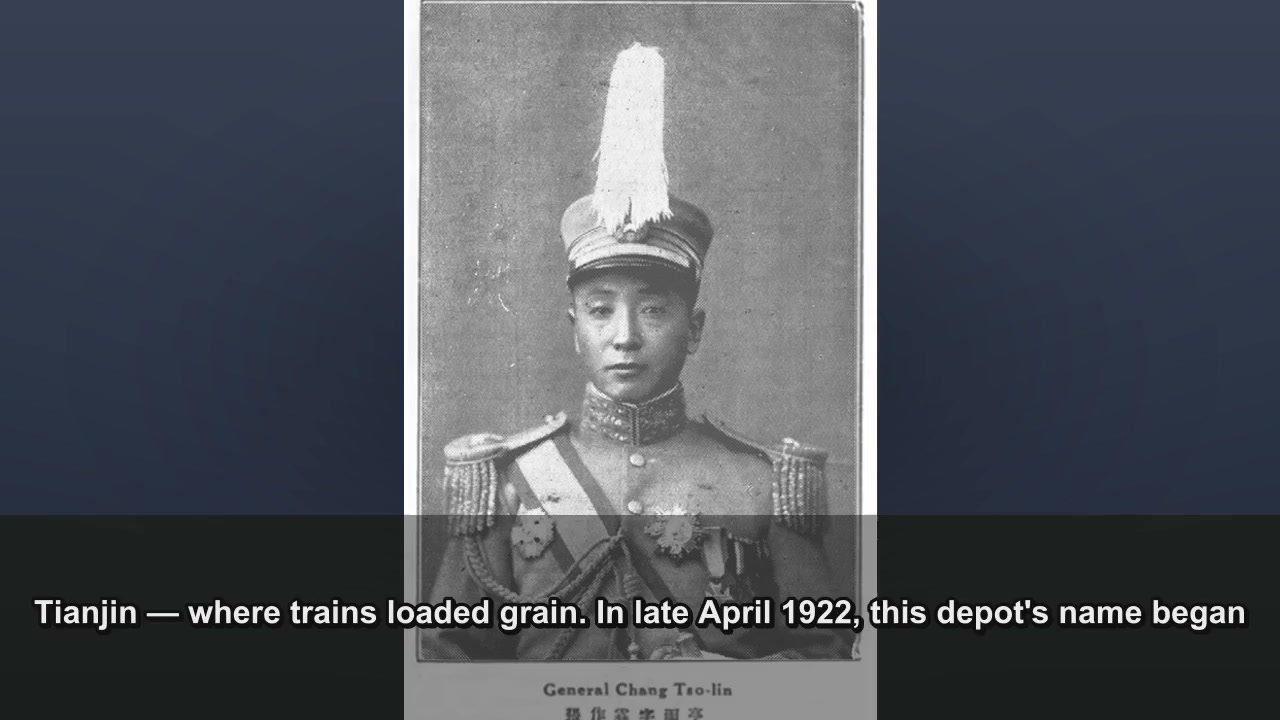
Cold open — a grain depot. Junliangcheng: an ordinary little grain station on the railway east of Tianjin. Zhang Zuolin moved his headquarters for 120,000 men into that depot. Then, in just seven days, he was driven from that depot all the way back north of the Shanhai Pass.
Act I — why they fought. Two years earlier (1920), the Zhili–Anhui War had seen Duan Qirui's elite collapse in five days — this episode first answers "how did Duan Qirui fall," then returns to the present. A cabinet list lit the fuse: Liang Shiyi became premier and borrowed from Japan to redeem the Jiaoji Railway; Wu Peifu answered with "one telegram a day" for months, until Liang, cursed out of office, left Beijing on sick leave. The sharpest stroke: Wu's telegram of January 11 dug up the words "Zhao Family Compound" — the house students burned two years earlier in the May Fourth movement, now turned into ammunition for name-calling. In the same year (1921), another meeting in a Shanghai room is left here as a single dotted line.
Act II — the Fengtian army enters the pass. Before marching, Zhang renamed his army the "Pacify-the-Mighty Army"; 120,000 against 100,000, headquarters at Junliangcheng; Wang Yongjiang wrote him a poem — "a hero's insight differs from a scholar's" — and he went his own way; Zhang Xueliang, age 21, saw his first battle, his name printed in Ta Kung Pao for the first time.
Act III — seven days of battle. On April 28 Zhang gave the order; the eastern route hit Machang, the central hit Gu'an and Baxia, the western hit Changxindian — three fronts at once. The cannon-fire at Changxindian carried on the wind to the Legation Quarter; embassies urged their nationals inside the walls; on May 2 Ta Kung Pao wrote "the cannon-fire was extremely dense, the residents greatly alarmed, and rumors spread"; Zhili troops moved "five hundred cartloads" of supplies east. On May 3, Wu Peifu took the offensive himself and swung around Lugou Bridge.
Act IV — defection and collapse. On May 4, the 16th Division — originally the old unit of Feng Guozhang — defected at the front under its commander Zou Fen; the Fengtian western line caved in, and Changxindian, Yongqing, Jinghai fell one after another. On May 5 Zhang ordered the retreat: seven days, from entering the pass to withdrawing. Elsewhere, Feng Yuxiang slipped out of Tongguan and took Henan.
Act V — after the defeat. On May 10, President Xu Shichang dismissed Zhang from all his posts — dismissed, but the order could not cross the Shanhai Pass; they could not kill him or seize his home. On June 4 Zhang returned to Fengtian, named himself commander-in-chief of the Three Eastern Provinces, and declared autonomy; Wang Yongjiang ran Fengtian, whose revenue in 1923 reached over 30 million with a surplus of 8.2 million; on June 11 Li Yuanhong returned as president and the old parliament reopened — "the restoration of the legal system."
Coda — an open question: the winner went to Beijing, the loser went back to Fengtian. Yet in this same year, the presidency in the capital changed hands and the parliament reopened its doors — after the guns fell silent, which way would this country go?
The complete script and sources are on sylogs.com (Official website: sylogs.com).
00:00 Intro
00:30 Cold Open · Seven Days, and a Stack of Newspapers
03:47 Act I · Why They Fought
12:12 Act II · The Fengtian Army Enters the Pass
15:30 Act III · Seven Days of Battle
19:11 Act IV · Defection and Collapse
23:00 Act V · After the Defeat
26:56 Coda · Close and Open Question
Shenzhou Dadi, Zhang Zuolin, Wu Peifu, First Zhili-Fengtian War, Beiyang, Republic of China, Zhang Xueliang, Chinese history, documentary
相關影片
 How Did a Warlord Lose a War in 7 Days? | 1922 China (Shorts)
 They Burned a Minister's House — and the State Let Them Go | 1919
 A Victor Robbed at the Feast: Should the Beiyang Government Fall?
 They Put the Emperor Back on the Throne — for 12 Days (Shorts)
 They Put the Emperor Back on the Throne — for 12 Days
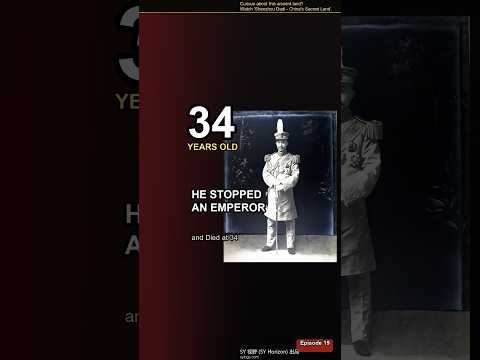 He Stopped China's Emperor, and Died at 34
本站工具 · 非影片內容 · 新用戶 7 天免費試用
本站自營工具,與本片內容無關。以 Email 驗證碼登入即完成註冊,免密碼、免綁卡;試用 7 天到期自動結束,絕不扣費。
- 海外生活通 🔒 — 為海外生活、跨國移居人士設計的實用工具:官方文書與信件起草、當地詐騙與風險快查、海外超市比價、本地生活急救問答。7天免費試用。
- 火眼金睛防詐護盾 🔒 — 輸入可疑文字、網址或情境,識破投資、網拍、求職、交友、假檢警五大騙局。
- 一鍵煩惱消 🔒 — 一個工具解決網購、填表、海外生活等各種煩惱:無水印影片下載、網頁快照收藏、商品比價、匯率尺碼換算、短網址防騙還原、DNS診斷、臨時信箱、緊急熱線等 7 大功能區。7天免費試用。
- 貼身執行官 🔒 — 一言交辦、全程代辦:用自然語言下達任務(訂票、住宿、行程、商務安排、提醒),執行官自動拆解子任務並生成可執行計畫,做你 24 小時的私人助理。7天免費試用。