How China's Washington Was Destroyed? | Shenzhou Dadi Episode 18 · 神州大地 · 第一季
👁 0 次觀看
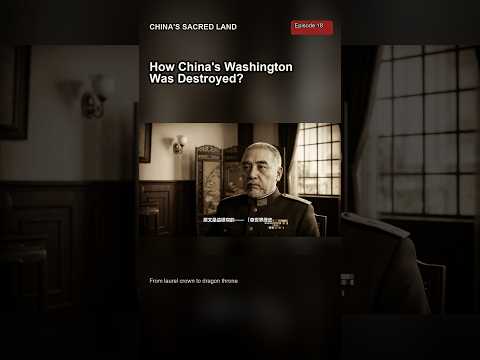
Episode 18 of Shenzhou Dadi (China's Sacred Land): "How China's Washington Was Destroyed."
On February 15, 1912 — the very day Yuan Shikai was elected Provisional President of the Republic of China — the delegates of seventeen provinces voted unanimously, and the circular telegram from Nanjing's Provisional Senate read: "In the history of the world, in the election of a president, only Washington has ever received the unanimous vote of the whole assembly. You are his reappearance. We deeply rejoice that you are the world's second Washington — and the first Washington of our Republic of China." The laurel crown of "the Washington of China" was placed on his head by the republic itself.
Yet barely three years later, the same man took the emperor's crown and died of worry on the dragon throne, condemned by the whole nation. Between "Washington" and "emperor" lay not ambition, but a chain of deadlocks — one thing after another that simply could not get done.
Act 1 — why he could not stand steady: three premiers in one year (Tang Shaoyi, Lu Zhengxiang, Zhao Bingjun), not one serving a full term; the 25-million-pound Reorganization Loan blocked by parliament, signed behind its back; the president's officials summonsed for questioning at the drop of a hat. The old Beiyang marshal, accustomed to "one order, every province obeys," was blocked for two full years.
Act 2 — tearing up the constitution: parliament dissolved in January 1914; the new Compact Constitution of May 1, 1914 — "The Great President is the head of the state and holds in his hands the whole of the power of governance." The old clause "must be countersigned" went to the wastepaper basket. Half a year later, the amended Presidential Election Law: a ten-year term, indefinitely renewable, with the successor designated by the incumbent on a "golden tablet" locked in a "stone chamber" — vocabulary that sounds exactly like an emperor naming his heir.
Act 3 — the knife from Japan: on January 18, 1915, minister Hioki Eki placed the "Twenty-One Demands" in Yuan's hands — five groups, the harshest demanding Japanese advisers in China's political, financial, and military administration. Yuan chose a third road: delay, leak, amend. The talks ran nearly five months; what was signed on May 25 was a set of thirteen treaties with Group Five almost entirely struck out. Most of the sovereignty was preserved — and the whole infamy fell on him. May 9 became "National Humiliation Day."
Act 4 — the imperial farce: the Chouanhui's "Six Gentlemen" agitating for monarchy under the mask of scholarship; petition groups hired and organized, down to a "Courtesans' Petition Group" and a "Beggars' Petition Group"; Yuan Keding's private one-copy edition of the Shuntian Times, feeding his father fake news daily until his own daughter exposed it with a genuine copy; and — right under Yuan's nose — Cai E, signing the generals' pro-monarchy petition by day while arranging, by night, his escape through Tianjin and a Japanese merchant ship back to Yunnan.
In December 1915, the "national delegates" endorsed Yuan as emperor by unanimous vote. He sat atop a "will of the people" stacked out of ballots and fake newspapers, one ceremony short of the dragon crown — while the loudest fuse of the farce, Cai E's flight from Beijing, was already burning.
Full chapters below. The complete script and sources are on sylogs.com.
00:00 Intro
00:17 Cold open · A laurel crown, crushed on the dragon throne
04:30 Act 1 · Beneath the laurel: why he could not stand steady
11:35 Act 2 · Tearing up the constitution: from 'must be countersigned' to 'holding all power'
23:42 Act 3 · The Twenty-One Demands: the knife Japan handed over
30:05 Act 4 · The Chouanhui and the endorsement: the imperial farce
44:30 Outro · next episode (Cai E's gun is already on the road to Yunnan)
On February 15, 1912 — the very day Yuan Shikai was elected Provisional President of the Republic of China — the delegates of seventeen provinces voted unanimously, and the circular telegram from Nanjing's Provisional Senate read: "In the history of the world, in the election of a president, only Washington has ever received the unanimous vote of the whole assembly. You are his reappearance. We deeply rejoice that you are the world's second Washington — and the first Washington of our Republic of China." The laurel crown of "the Washington of China" was placed on his head by the republic itself.
Yet barely three years later, the same man took the emperor's crown and died of worry on the dragon throne, condemned by the whole nation. Between "Washington" and "emperor" lay not ambition, but a chain of deadlocks — one thing after another that simply could not get done.
Act 1 — why he could not stand steady: three premiers in one year (Tang Shaoyi, Lu Zhengxiang, Zhao Bingjun), not one serving a full term; the 25-million-pound Reorganization Loan blocked by parliament, signed behind its back; the president's officials summonsed for questioning at the drop of a hat. The old Beiyang marshal, accustomed to "one order, every province obeys," was blocked for two full years.
Act 2 — tearing up the constitution: parliament dissolved in January 1914; the new Compact Constitution of May 1, 1914 — "The Great President is the head of the state and holds in his hands the whole of the power of governance." The old clause "must be countersigned" went to the wastepaper basket. Half a year later, the amended Presidential Election Law: a ten-year term, indefinitely renewable, with the successor designated by the incumbent on a "golden tablet" locked in a "stone chamber" — vocabulary that sounds exactly like an emperor naming his heir.
Act 3 — the knife from Japan: on January 18, 1915, minister Hioki Eki placed the "Twenty-One Demands" in Yuan's hands — five groups, the harshest demanding Japanese advisers in China's political, financial, and military administration. Yuan chose a third road: delay, leak, amend. The talks ran nearly five months; what was signed on May 25 was a set of thirteen treaties with Group Five almost entirely struck out. Most of the sovereignty was preserved — and the whole infamy fell on him. May 9 became "National Humiliation Day."
Act 4 — the imperial farce: the Chouanhui's "Six Gentlemen" agitating for monarchy under the mask of scholarship; petition groups hired and organized, down to a "Courtesans' Petition Group" and a "Beggars' Petition Group"; Yuan Keding's private one-copy edition of the Shuntian Times, feeding his father fake news daily until his own daughter exposed it with a genuine copy; and — right under Yuan's nose — Cai E, signing the generals' pro-monarchy petition by day while arranging, by night, his escape through Tianjin and a Japanese merchant ship back to Yunnan.
In December 1915, the "national delegates" endorsed Yuan as emperor by unanimous vote. He sat atop a "will of the people" stacked out of ballots and fake newspapers, one ceremony short of the dragon crown — while the loudest fuse of the farce, Cai E's flight from Beijing, was already burning.
Full chapters below. The complete script and sources are on sylogs.com.
00:00 Intro
00:17 Cold open · A laurel crown, crushed on the dragon throne
04:30 Act 1 · Beneath the laurel: why he could not stand steady
11:35 Act 2 · Tearing up the constitution: from 'must be countersigned' to 'holding all power'
23:42 Act 3 · The Twenty-One Demands: the knife Japan handed over
30:05 Act 4 · The Chouanhui and the endorsement: the imperial farce
44:30 Outro · next episode (Cai E's gun is already on the road to Yunnan)
相關影片
 How China's Washington Was Destroyed? | Shenzhou Dadi Episode 18
 China's First Democracy Died in 60 Days. Here's Who Killed It. (Shorts)
 China's First Democracy Died in 60 Days. Here's Who Killed It.
 China's First Election Was Won by a 31-Year-Old. Two Days Later He Was Dead | Ep.16 (Shorts)
 China's First Election Was Won by a 31-Year-Old. Two Days Later He Was Dead | Ep.16
 A Massacre on Victory Day: Can a Revolution Exempt Itself
本站工具 · 非影片內容 · 新用戶 7 天免費試用
本站自營工具,與本片內容無關。以 Email 驗證碼登入即完成註冊,免密碼、免綁卡;試用 7 天到期自動結束,絕不扣費。
- 海外生活通 🔒 — 為海外生活、跨國移居人士設計的實用工具:官方文書與信件起草、當地詐騙與風險快查、海外超市比價、本地生活急救問答。7天免費試用。
- 火眼金睛防詐護盾 🔒 — 輸入可疑文字、網址或情境,識破投資、網拍、求職、交友、假檢警五大騙局。
- 一鍵煩惱消 🔒 — 一個工具解決網購、填表、海外生活等各種煩惱:無水印影片下載、網頁快照收藏、商品比價、匯率尺碼換算、短網址防騙還原、DNS診斷、臨時信箱、緊急熱線等 7 大功能區。7天免費試用。
- 貼身執行官 🔒 — 一言交辦、全程代辦:用自然語言下達任務(訂票、住宿、行程、商務安排、提醒),執行官自動拆解子任務並生成可執行計畫,做你 24 小時的私人助理。7天免費試用。