An Army Turned Its Guns on the Capital It Was Sent to Defend | Shenzhou Dadi Episode 24 · 神州大地 · 第一季
章節
👁 0 次觀看
An army that was supposed to march to the front turned its guns around and slipped into the capital under cover of night — the autumn of 1924, when Beijing was overturned from behind. Three days later, the eighteen-year-old who still lived in the Forbidden City was asked — politely but firmly — to move out.
⏱ Chapters
0:30 Cold Open: Two Doors, One Night
3:02 Act One · The Guns at Shanhai Pass
9:03 Act Two · The Return by Night
13:54 Act Three · The Collapse
16:20 Act Four · Asking the Emperor to Leave
22:24 Act Five · The Banners Change
24:43 Act Six · The Close
This is Beijing under the Beiyang government, in the last years of Republican China.
That autumn, the guns at Shanhai Pass had roared for nearly a month. Two warlord armies tore at each other at the front — while, behind their backs, Beijing was overturned. Feng Yuxiang staged the Beijing Coup: he imprisoned President Cao Kun and renamed his troops the "National Army."
At the same time, another door was pushed open. Puyi had lived in the Forbidden City for thirteen years. Now he was handed a notice: please move out. You have three hours.
After that night, Duan Qirui returned, Zhang Zuolin marched in, and the banners over Beijing changed overnight. But when the gun decides who rules, does a nation move forward — or simply spin in place?
This episode lays out the facts. You decide.
Official website: sylogs.com
#Beiyang #FengYuxiang #BeijingCoup #Puyi #ChineseHistory #Documentary
影片全文轉錄
Remember a name: Feng Yuxiang. In the autumn of
1924, in the city of Beijing, two doors were
knocked on — on almost the same night, by the
same troops, from the outside. Behind one door
lived the President of the Republic of China
Cao Kun. Behind the other lived a young man of
eighteen — his family name Aisin-Gioro, the last
emperor still inside the Forbidden City. Two
doors: one the presidential palace, the other
the imperial palace. The same men, the same
guns, opened both. In a single night, the sky
over the warlord north turned over. But before
that night, the guns at Shanhai Pass had
already roared for nearly a month — the
soldiers at the front were still fighting for
their lives, while the rear courtyard of the
capital was quietly, gently, overturned from
behind
Let's see that night clearly. In the early
hours of October 23, 1924, inside the
presidential palace, Cao Kun was still in his
bed — unaware that, beyond the city, a force that
should have been marching to the front had
wheeled around and was feeling its way darkly
into Beijing. And in the Forbidden City, the
eighteen-year-old Puyi was also asleep
equally unaware that in a few days, soldiers
with guns would walk into his bedroom and ask
him to move out. The same night, one city, two
battlefields: one amid the shellfire of
Shanhai Pass; the other beside a bed in the
capital
The sharpest picture is two things set side
by side. On one side, the dust of the Shanhai
Pass gate tower, three meters shaved off by
heavy artillery. On the other, the quiet
streets of Beijing, where a column of troops
cut the telegraph wires, sealed the news, fired
not a shot, and took a whole capital. The front
was bleeding; the rear was changing hands — and
these two things happened on the same day, the
men at the front knowing nothing of it yet
This episode uses the night of Feng Yuxiang's
Beijing coup to press one large question: when
the gun decides who sits in Zhongnanhai, has
this country moved forward, or merely spun in
place
But don't rush to label that night. This coup
on its face, was warlords turning on each
other — yet the thing that lit the fuse was a
bowl of gruel. A bowl of millet porridge that
Feng Yuxiang's men ate every day at their
post. Why would a turncoat general be set
alight by a bowl of porridge? For that, we must
start with the guns at Shanhai Pass
To make sense of 1924, pull the lens out to
Shanhai Pass, beyond Beijing. Remember the
previous episode — the First Zhili-Fengtian War
In 1922, Zhang Zuolin marched his Fengtian
army through the pass and was beaten back
north of Shanhai Pass in seven days. That year
Zhang was the loser. Losers remember best — two
years later, in September 1924, he came back
This time he renamed his force the "Conquering
Army," made himself commander-in-chief, and with
six armies said to number 170,000, advanced
through the pass along the Beijing-Fengtian
railway. The Northeastern King had returned
and this time he came to settle accounts
But the great war was not lit by Zhang Zuolin
nor by Wu Peifu — it was two outsiders who
struck first, far away in Jiangsu and Zhejiang
On September 3, 1924, the Jiang-Zhe War
erupted around Shanghai and Nanjing: Qi
Xieyuan of Jiangsu and Lu Yongxiang of
Zhejiang came to blows over territory. A local
warlord squabble — yet it was a match that
touched off the entire powder keg of North
China. On September 4, Zhang Zuolin telegraphed
that he would "aid Lu," and under that pretext
marched his army through the pass. On
September 18, the Second Zhili-Fengtian War
formally began. You see — in the Republic, wars
rarely began because A wanted to fight B; more
often A and B's scuffle in a corner dragged C
and D in after them
The Zhili response was Wu Peifu. By Cao Kun's
order he took the title "Commander-in-Chief of
the Pacification Army" and met the Fengtian
forces head-on at Shanhai Pass, the Nine Gates
and Shimenzhai with some two hundred thousand
Zhili troops. This battle was unprecedented in
scale: both sides committed land, sea, and air
Fengtian hauled 240mm heavy guns down from
the Port Arthur forts and planted them on the
line; Wu directed from the front and even
brought in the navy. Seven days of shelling
shaved three meters off the Shanhai Pass gate
tower. This was the most savage, and the most
modern, head-on collision of the warlord wars
Yet while the guns at Shanhai Pass roared
loudest, one man was not at the front. His name
was Feng Yuxiang. He was commander of the
Third Army of the Zhili forces, ordered out
through Gubeikou to hit the Fengtian flank. In
strength his column was the weakest; in
position he was closest to Beijing. Wu Peifu
placed this relatively weak force, nearest the
rear, on the outermost ring — an arrangement
that, in hindsight, looked like handing a knife
to an opponent. For Feng Yuxiang and Wu Peifu
already had an old score
This old score is a little sad to tell. Feng
Yuxiang and Wu Peifu had been Zhili comrades
but Wu checked him at every turn — blocking his
posts, withholding his territory, delaying his
pay. In 1923, Cao Kun meant to make Feng
military governor of Shandong; one objection
from Wu, and Feng's hopes came to nothing. In
the end Feng was moved out of Henan and given
an empty title — "Inspector-General of the Army
stationed at Nanyuan. The title sounded grand
in truth it stripped him of real power: no
territory, no pay, his troops couldn't even
issue rations. What did the men at Nanyuan eat
Bowl after bowl of thin millet porridge. A
general who held real troops, shortchanged by
his own superiors until his whole army drank
gruel — that bowl of porridge, Feng Yuxiang
remembered for the rest of his life, and this
old score would be repaid in a way no one
expected
Meanwhile a web was quietly woven. Feng
Yuxiang, Zhang Zuolin, and Duan Qirui — three men
of differing stands who even disliked one
another — formed the "Anti-Zhili Alliance" on the
single common ground of opposing the Zhili
clique and Wu Peifu. Duan Qirui, the old leader
broken by Wu in 1920 and left with no army of
his own, was once again hauled out as a banner
Feng Yuxiang was the nail driven into the
Zhili interior. With the alliance struck, Feng
marched out through Gubeikou — nominally to
fight Fengtian, in truth a mine planted at the
front, waiting for its moment
This secret pact had a rather romantic detail
Feng Yuxiang and Huang Fu agreed on a code
book; their secret telegrams were decoded by
Huang Fu's wife. In an age when a telegram was
a command, this code book was the password to
a coup. Huang Fu later wrote back eight words
Resolve to save the nation — all hinges on this
One sentence made a warlord's betrayal sound
like a righteous cause. Yet whether righteous
or not, history never listens to what the
actors call themselves; it looks only at who
afterward, paid the price for whom
The story splits two ways. In 1924, two great
events brewed at once on this land: one, the
guns at Shanhai Pass in the north and the
about-face coup in Beijing; the other, in the
city of Guangzhou to the south, another group
was also doing something — drilling troops
holding rallies, organizing a new armed force
This episode records the northern branch; the
southern branch we set aside for now and
return to Beijing. As for the men in that
southern house, their voices were faint then
and no one imagined that this thread would, in
the decades to come, slowly wind its way into
the fate of this land. The main stage of that
year was still the warlords, the guns, and that
one piece of constitutional law — the southern
branch we leave for another telling
Back to the north. The guns at Shanhai Pass
covered another move: a column of troops
quietly eyeing the back door of Beijing. On
the night of October 22, that move would
become a knife in the Zhili back — and on the
hilt of that knife was carved the grudge of a
bowl of millet porridge
The night of October 22, 1924. Feng Yuxiang's
Third Army should have been fighting Fengtian
along the Gubeikou line. But that night he
made a decision: wheel around, return to
Beijing. His troops cut the telegraph wires
along the way, sealed the news, and slipped
toward the capital unknown to anyone. Inside
the city an accomplice was already in place
Sun Yue, deputy commander of the Beijing
garrison, opened the gate and let the column
in. Sun Yue was an old friend of Feng's; and
the division sent to "watch" Feng, under Hu
Jingyi, turned and stood with Feng as well. You
see — in a coup, what matters most is seldom the
guns at the front, but the door at the rear
who holds the key to the city gate
In the small hours of October 23, Feng's
troops entered Beijing. The garrison was still
asleep; the gate had already changed watch
That night, not a shot was fired in the
capital. Feng, Hu, and Sun jointly telegraphed
the nation for peace, and imprisoned President
Cao Kun in the Yanqing Pavilion of
Zhongnanhai. A president was lifted from his
bed before he understood what was happening
and the presidency was gone. The Cao Kun
roused from bed saw not staff officers but
armed guards — this time it was not the enemy
who broke into the city, but his own men who
handed the city to the enemy
We raised this army to defend the nation, not
to slaughter one another — a shame before the
world. Since the ninth year of the Republic
unnamed wars have risen again and again; the
fiercer the strife, the deeper the wound to
our people. If those in power had the least
conscience, they would bring peace and let the
people rest. Yet strife began in the southeast
and spread to the northeast, dragging the
whole nation's armies into the field and the
bones of myriad commoners into the earth — for
what were they fighting, and for whom? Those
who began it could scarce answer. This year
floods and droughts leave famine across the
land; we have barely strength to survive, yet
they parade their might within our borders
What crime had our people, to suffer such
poison — calamity from heaven and man at once
We, groping through the night, could weep but
no tears fell; driven by conscience to the
cause of peace, on the twenty-third of the
tenth month we resolved to turn our troops
back, and with the armies under us form the
National Army of the Republic of China, sworn
to serve nation and people. Should any delight
in war and bring ruin upon our people and our
state, this army, to shorten the conflict, will
not shrink from taking up arms against them
Our whole force has now reached the capital
here where the legations of every friendly
power reside, order is paramount, and we shall
be responsible for its keeping. As for all
questions of political settlement, we ask the
worthy and learned of the nation to rise
without delay, to confer on remedies and open
a renewed beginning. As it is said, from great
hardship a state is born — perhaps in this. We
bow in expectation and await your counsel
Having taken Beijing, the first thing Feng
Yuxiang did was rename his troops — from "Zhili
Third Army" to "National Army," making himself
commander-in-chief and commander of the First
Army. The name must ring; the banner must be
upright — an old habit of the old armies: before
the merit is counted, first declare your side
to be the side of the "nation." A turncoat
general, with two words, reinvented himself
from "traitor" into "righteous army
The man who came to force Cao Kun's
resignation after his imprisonment — who was he
A man named Wang Chengbin. You may not have
heard the name, but in 1923 it was Wang who
did the crucial deed — he "intercepted the train
and seized the seal," and with his own hands
lifted Cao Kun onto the presidency. That year
when Cao won the office by vote-buying, Wang
was the chief accomplice; a year later it was
Wang who walked into the presidential
residence and forced Cao to write his letter
of resignation. What did Cao Kun feel, seeing
him? Sour, sweet, bitter, hot — all churned
together. The same pair of hands that lifted
you up and pulled you down were the same pair
in this city the seat is never long held, and
whoever sits in it is the next to be asked
down
At this very moment, Wu Peifu at the Shanhai
Pass front still knew nothing. He was still
driving the Zhili forces against Fengtian
hoping Feng's Third Army would outflank them
from the side. He did not know that the
outflanking" army had already wheeled around
behind his own back. One city had changed
hands; the front-line commander was still
waiting for reinforcements that would never
come — perhaps the coldest joke in military
history
The news reached Shanhai Pass on October 24
Only then did Wu Peifu see that his rear was
already gone. In front, Zhang Zuolin's Fengtian
army pressed hard; behind, Feng Yuxiang's
National Army had plundered the old nest
caught between front and rear, the Zhili
forces collapsed across the board. The
collapse was clean — not a lost battle, but the
whole board pulled out from underneath. Wu
Peifu was a fine fighter, yet for all his
calculations he never reckoned that the
house-guarding" Third Division had long been
sent to the front, while the real home, Beijing
was left to others
On November 2, Cao Kun was forced to resign
the presidency. Wu Peifu? He took his remnant
down to Tanggu and boarded a ship called the
Huajia, fleeing south by sea. A year before he
had been the "ever-victorious general" who beat
Zhang Zuolin; a year later he drifted out from
the same sea in disgrace. The Zhili dream of
unification by force" shattered in the
shellfire of Shanhai Pass, and in Feng
Yuxiang's bowl of millet porridge. Beneath
that bowl lay too much accumulated coldness
Wu Peifu held two hundred thousand troops, yet
lost to a general shortchanged until his
whole army drank gruel; what he lost was never
the numbers, but the hearts of men
Feng Yuxiang took Beijing, but he dared not
and could not, swallow the fruit alone. On
November 3, another man stepped into the city
Zhang Zuolin, entering through the Zhengyang
Gate. Legend has it he wore a sable coat and
fur-lined boots, flanked by two thousand
Northeastern cavalry — "the Northeastern King
has come." On the streets of Beijing someone
even posted a couplet, half-true half-false
The Northeast tiger crouches in Zhongnanhai
the Northwest wolf squats by the Forbidden
City" — the tiger was Zhang, the wolf was Feng
That couplet turned a solemn coup into farce
Yet farce or not, the chair of power stood
empty, and who would sit in it was not yet
decided
The Fengtian army won the battle; the National
Army grabbed the rear. Two victors stood
before the same empty chair. Neither would
yield to the other, yet neither dared kick the
other out — for whoever did would become the
next target. So they made a warlord's choice
invite a man with no troops to sit in that
chair. That man was Duan Qirui
Now we open the second door — the Forbidden
City. Since Puyi's abdication in 1912, a "little
court" had remained inside the palace: the
abdicated emperor still drew the annual
stipend promised by the Articles of Favorable
Treatment, the palace still kept eunuchs, maids
and an interior ministry, and behind closed
doors it went on calling him sovereign. Twelve
years like this. An emperor already abdicated
living in the imperial palace, kept alive by a
Republican treaty — the thing itself was a
fable of the age: the old would not leave; the
new invited it to sit a while longer. And this
year Puyi was only eighteen — two years before
in the winter of 1922, he had just married
Empress Wanrong and Consort Wenxiu; the
wedding awning in the Forbidden City was
hardly taken down, the smell of firecrackers
barely faded. An eighteen-year-old bridegroom
living in someone else's house, guarding a
favorable treatment" granted by others — this
marriage, from the start, was a celebration
with no foundation
On November 5, 1924, the fable was cut short
with one stroke. Feng Yuxiang's National Army
sent a general named Lu Zhonglin with forty
policemen, twenty soldiers, and two trucks into
the Forbidden City, delivering a document — the
revised Articles of Favorable Treatment
demanding that Puyi move out that very day
How long? Accounts differ: two hours, some say
three, others. An eighteen-year-old young man
was told: today you must leave the home you
had lived in for nineteen years. Lu Zhonglin
even slapped his watch on the table and
counted down
1. The Xuantong Emperor of the Great Qing
shall from this day be forever stripped of
the imperial title, and shall enjoy with the
citizens of the Republic all rights equal
before the law. 2. From the revision of these
articles, the government of the Republic shall
each year grant the Qing house a household
stipend of five hundred thousand yuan, and
shall specially expend two million yuan to
establish a Beijing workshop for the poor
giving prior place to the impoverished
bannermen. 3. The Qing house shall, from this
day, remove from the Forbidden City; it may
thereafter choose its own place of residence
and the Republic remains responsible for its
protection. 4. The temples and tombs of the
Qing house shall be forever maintained with
sacrifice, and the Republic shall set guards
for their protection. 5. All the private
property of the Qing house remains wholly its
own, which the Republic shall specially
protect; all its public property shall belong
to the government of the Republic
The move could have been simple, but a string
of small incidents made it harrowing. Puyi's
tutor Shao Ying came out to bargain: first
three months, then one month, then ten days — Lu
Zhonglin lost patience and snapped: if you
don't leave today, I'll pull my troops away
can you answer for the trouble that follows
At three in the afternoon Lu even shouted to
his battalion commander: don't fire from
Jingshan yet! — a slip that gave away the truth
behind the "deadline" lurked the threat "move or
we use force." An eighteen-year-old emperor and
a band of armed men, haggling in a palace
centuries old over the hour by which he must
go
The moment Puyi was notified, he tried to call
someone — Johnston, or his father Zaifeng — but
the telephone lines had already been cut
Inside the palace, the two dowager concubines
Jingyi and Ronghui, hearing of the move
declared they would rather throw themselves
down a well than leave the palace. His father
Zaifeng was let in; his lips trembled for a
long while and out came only four words: "Obey
the decree, obey the decree." A father could
give his son no help at that moment — only obey
the decree. Puyi had known since childhood
that he was a symbol kept under "favorable
treatment"; but the day the symbol was taken
down, he found he hadn't even the right to
make a phone call
What Puyi finally handed over were two seals
the "Emperor's Seal" and the "Xuantong Treasure
These two seals marked the end, in the last
room of the Forbidden City, of the Aisin-Gioro
house that had stretched two hundred and
eighty years. More than four hundred and
seventy eunuchs and over a hundred maids were
dismissed, each given ten (eunuchs) or eight
maids) silver dollars; with the money in hand
they walked out the palace gate. The tail of a
dynasty was thus gently closed by a few
soldiers, with one document and a few cloth
bags of coins
It is ironic. The one angriest at Puyi's
expulsion was not a Republican general, but
another warlord — Zhang Zuolin. The Northeastern
King, who had just entered Beijing riding the
Northwest wolf" couplet, flew into a rage when
he heard Puyi had been driven from the palace
he swore, and at once sent someone to mediate
demanding the "restoration of the imperial
treatment." But Puyi, instead, slipped into the
Japanese legation. Zhang, hearing this, said
with displeasure: "Do you not trust me, Zhang
Zuolin?" A expulsion, it turned out, planted a
rift between the two victors. In the eyes of a
king" like Zhang, an emperor could be abolished
but not by someone else — the rules of that
chair had to be set by men like him, not
snatched first by a turncoat general
Why does this step deserve a whole act
Because what it severed was not merely Puyi's
dwelling, but the last lawful wisp of a
monarchy two thousand years old. From the
First Emperor to Xuantong, the emperor's seal
was, for the first time, utterly voided in
Republican law. An eighteen-year-old young man
asked to leave the home he'd lived in for
nineteen years — and this step, China had waited
more than two thousand years for. This act
takes it as its positive pivot: not to glorify
anyone, but to lay the thing itself bare — the
old, at last, agreed to leave
Having seen off the emperor, it was the
premier's turn. On November 24, Duan Qirui took
the post of "Provisional Chief Executive," with
his executive government at Tieshizi Hutong
today No. 3 Zhangzizhong Road). The post had no
presidential title, yet held real power; and
Duan, the old leader broken by Wu two years
before and left with no army, was once again
pushed to the center of power. The two victors
neither willing to swallow it alone, invited a
man with no troops to be the "face." The rule of
the warlord north showed itself again: the
rivers and mountains won by the gun must in
the end be stamped by a man who holds the pen
The new order was a triangle: the Fengtian
clique under Zhang Zuolin, dominant; Feng
Yuxiang's National Army holding the capital
region; Duan Qirui as the "face." Territory was
redistributed — Zhili went to Li Jinglin
Shandong to Zhang Zongchang, Jiangsu to Yang
Yuting, Anhui to Jiang Dengxuan, and Chahar
remained in Feng's hands. A coup bought not
the unification of China but a fresh carve-up
among these few. This order carried its own
fragility in its very name: three men, each
with his own calculus, none trusting the other
The southern branch we set aside earlier — that
band of men in Guangzhou also moved now. The
man who issued the "Manifesto for the Northern
Expedition" accepted the invitation of Feng
and Duan to go north and "deliberate on the
affairs of state" — he set out from Guangzhou
detoured through Japan, and finally reached
Beijing. And in Guangzhou, the men drilling
troops and holding rallies were still
assembling. Two threads, one open one hidden
both looking north: the flag on Beijing's wall
had changed, and the southern branch turned
its gaze to this city. This branch we do not
detail here; we leave it for the next telling
Duan Qirui was back, Puyi was gone, Zhang
Zuolin and Feng Yuxiang each with his own
thoughts. The flag on Beijing's wall had
changed. But how long could this new flag fly
The new order the three built was like a bow
drawn taut — Feng and Zhang already guarded
against each other; Zhang, angered by Puyi's
expulsion, already bore a grudge against Feng
The bowstring could snap at any moment
That night, Beijing's wall changed its flag. A
hundred years on, some things remain. The
Shenwu Gate of the Forbidden City — you can
still see it today; it is the gate Puyi was
asked out of. No. 3 Zhangzizhong Road still
stands with the old executive-government main
building, now the campus of another school. The
Zhengyang Gate, the tower Zhang Zuolin entered
through, still stands. Three real sites string
together that night — if you go to Beijing and
stand before the Shenwu Gate, you can picture
the backward glance of that eighteen-year-old
as he was asked out
Back to Duan Qirui. This key figure, raised up
in earlier episodes but never given his exit
is at last closed out here. He returned to
power with the title "Provisional Chief
Executive," yet he was a "face" with no army — the
real guns lay in Zhang's Fengtian army and
Feng's National Army. This fragile balance
held less than a year and a half. On
March 18, 1926, guards of the executive
government fired on demonstrating students
and citizens before his own government gate
the March 18th Massacre; that shot destroyed
the last of his "Founder of the Republic
reputation, and the nation rose in
condemnation. But what truly pulled him down
was not the shot itself — after the guns
sounded, Feng's National Army and Zhang's
Fengtian army turned on each other, and the
military balance in Beijing tipped wholly to
the Fengtian side; on April 20, Duan, "escorted
by the National Army general Lu Zhonglin, fled
Beijing in panic to the foreign concessions
of Tianjin, and never returned to the center
of power. A strongman who had once
reconstructed the Republic" ended with his
name ruined by a massacre and his seat lost
to a mutiny — this is the most common ending
for a warlord figure: he rose by the gun, and
often fell by it too
This episode leaves you three things to take
away. What to like: the night Puyi left the
palace — a young man asked out of the home he'd
lived in for nineteen years, and this step
China had awaited more than two thousand
years. What to pity: the soldiers at Shanhai
Pass still fighting for their lives while
Beijing had already changed hands — the blood
at the front bought the knife at the rear
What to help with: stand a while at the Shenwu
Gate of the Forbidden City, then go see No. 3
Zhangzizhong Road, that old executive
government — one night, two doors, witnessing the
same changing of the sky
The story splits two ways: one, the flag
changed on Beijing's wall and the
Northeastern cavalry have not yet dispersed
the other, the southern branch drilling new
troops has also set out. This episode records
the northern branch — the southern branch we
leave for the next telling. Which way, in the
end, will this country go? We take it up next
time
相關影片
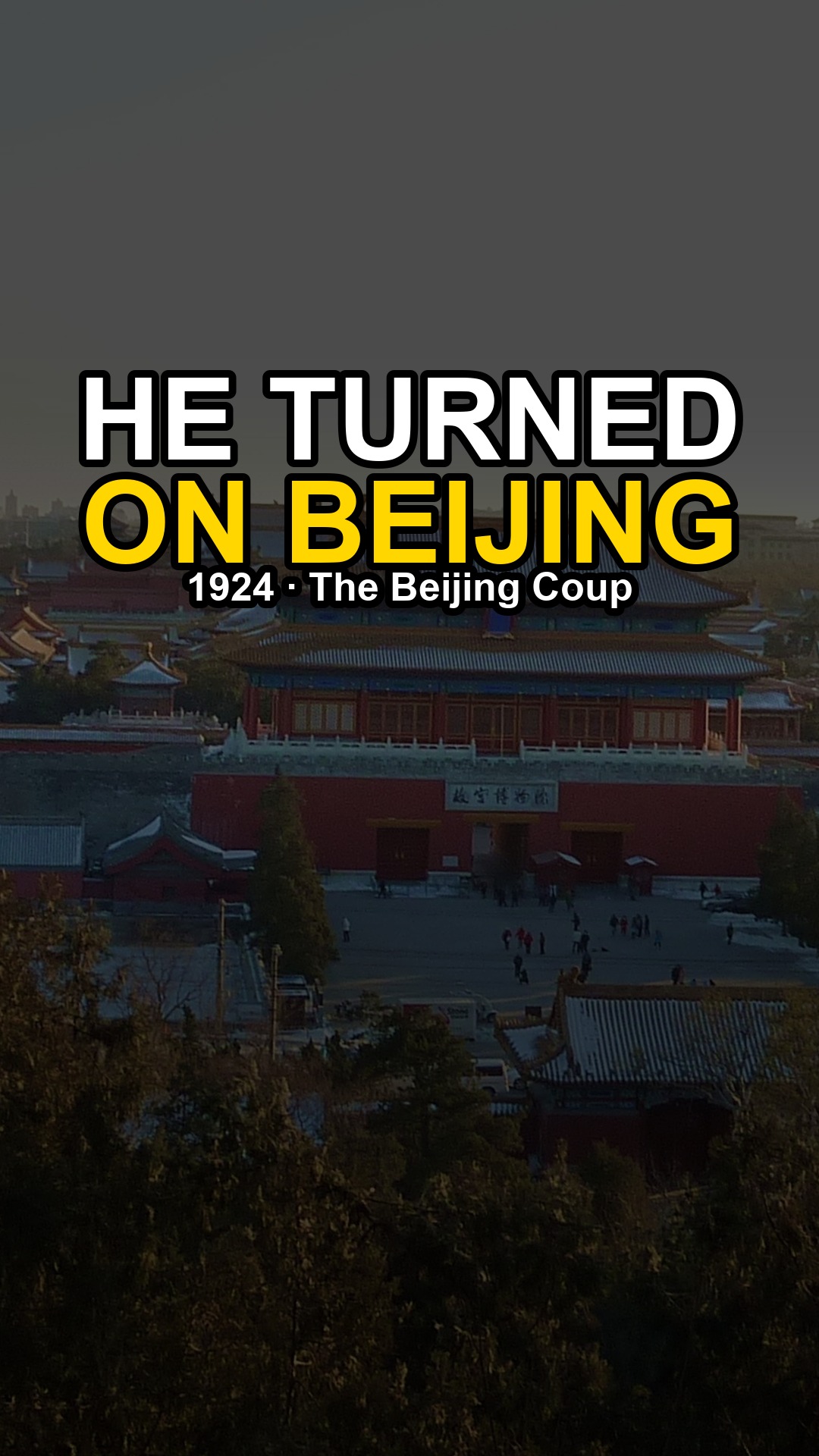 The Night Beijing Changed Hands | 1924 Warlord Coup (Shorts)
 He borrowed foreign money and guns for his presidency | 1920s Guangzhou (Shorts)
 Patriot or Traitor? Sun Yat-sen in Guangzhou — who bankrolled his presidency? | Shenzhou Dadi Episode 25
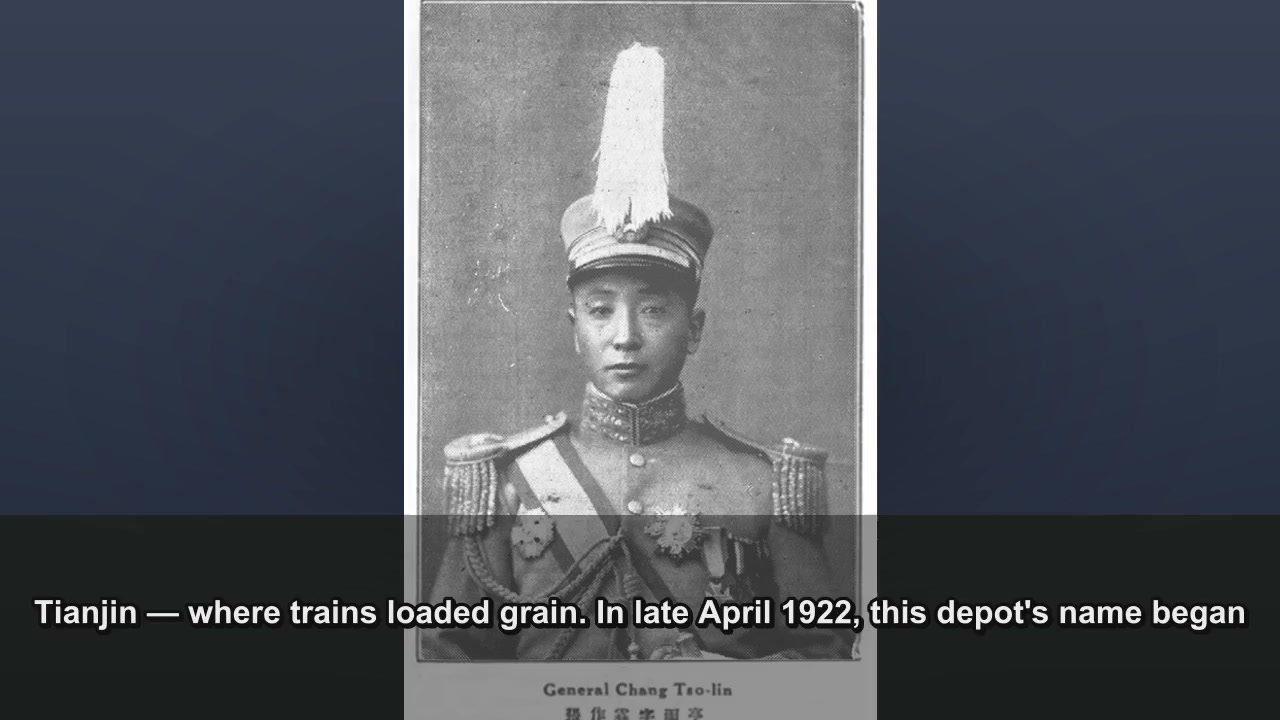 How Did a Warlord Lose a War in 7 Days? | 1922 China (Shorts)
 Seven Days to Beat the Northeast King | Shenzhou Dadi Episode 23
 They Burned a Minister's House — and the State Let Them Go | 1919
本站工具 · 非影片內容 · 新用戶 7 天免費試用
本站自營工具,與本片內容無關。以 Email 驗證碼登入即完成註冊,免密碼、免綁卡;試用 7 天到期自動結束,絕不扣費。
- 海外生活通 🔒 — 為海外生活、跨國移居人士設計的實用工具:官方文書與信件起草、當地詐騙與風險快查、海外超市比價、本地生活急救問答。7天免費試用。
- 火眼金睛防詐護盾 🔒 — 輸入可疑文字、網址或情境,識破投資、網拍、求職、交友、假檢警五大騙局。
- 一鍵煩惱消 🔒 — 一個工具解決網購、填表、海外生活等各種煩惱:無水印影片下載、網頁快照收藏、商品比價、匯率尺碼換算、短網址防騙還原、DNS診斷、臨時信箱、緊急熱線等 7 大功能區。7天免費試用。
- 貼身執行官 🔒 — 一言交辦、全程代辦:用自然語言下達任務(訂票、住宿、行程、商務安排、提醒),執行官自動拆解子任務並生成可執行計畫,做你 24 小時的私人助理。7天免費試用。